Marketing No Comments

Potters Bar Landlord Fined Nearly £7,000 For Failing To Obtain HMO Licence

A Potters Bar landlord is facing a fine of nearly £7,000 after he failed to obtain the correct HMO licence for his rental property.

Andrew Harvey avoided paying the £500 licence fee, leaving him with a bill of over ten times this when Hertsmere Borough Council bought legal action against him.

Harvey appeared at St Alban’s Magistrates Court on Wednesday 22 November due to his failure to obtain a HMO Licence for the rental property he let, located on Oakfield Close. The property had been operating without a licence from March 2012 to June 2017. The court was told that Harvey, 50, from Stevenage, avoided all contact from the borough council, failing to respond to emails and other correspondence on multiple occasions. Harvey defended himself by claiming that he had not received the emails from the council.

When sentencing the Potters Bar landlord, magistrates said they believed Harvey should have been aware anyway that his property was meant to be licenced. It was therefore his duty to ensure that the correct licensing for the property had been obtained.

It is a criminal offence for anyone to control or manage a house with three or more storeys which is occupied by five or more people in more than one household without a licence.

An inspection by the council’s private sector housing officer in June revealed five veterinary students living in the home.

Harvey was fined £5,542 and was also ordered to pay £1,319.29 in costs, as well a £125 victim surcharge.

A House in Multiple Occupation licence costs just £542 for five years, proving that in aiming to avoid the licence fee Harvey was in fact subjecting hiself to a far higher fare.

Portfolio holder for housing, Councillor Jean Heywood, said: ‘Everybody has a right to live in decent accommodation, and the council takes its responsibilities to enforce basic living standards very seriously. As a landlord, you are responsible for the welfare of your tenants and there are strict rules in place to ensure certain conditions and duties are met. This is for the protection of all. The vast majority of landlords are happy to work with us to ensure they are managing their properties and looking after their tenants according to the letter of law. However, we will not hesitate to take other landlords who deliberately fail in their duties to court, where they could receive unlimited fines.’

Source: Residential Landlord

Marketing No Comments

Demand for buy-to-let property in North West is soaring

Demand for buy-to-let property in the North West has soared by 38 per cent year on year, according to the Mistoria Group.

Cities and towns are proving to offer the best opportunities, with yields of 7.08 per cent in Salford, 5.96 per cent in Leeds and 5.79 per cent in Manchester, new research by the specialists in investment property shows.

Manchester is in the Top 10 buy-to-let postcodes in the UK, with rental price growth of 7.53 per cent and yields of 6.11 per cent.

The resilience of the property market in the North West has been boosted by regeneration which has bought new jobs, transport links and a range of large housing projects.

Mish Liyanage, managing director of the Mistoria Group, said: “The housing market in the North West is stable, proving the strength of the property market and economy as a whole, in this region.

“The Northern Powerhouse offers investors unbeatable buy-to-let opportunities, way ahead of London and the South East. Affordable property prices and a booming economy is drawing students, families and professionals to the region.”

HMOs in Liverpool and Salford are proving popular with investors, as both cities have a high population of students and young professionals.

Because Article 4 is not in operation in these cities, investors are able  convert a family home, or a home used by a single person (C3 -dwelling house/flat) to a small shared house of up to six unrelated individuals (C4 –HMO), without any planning permission.

A HMO property can deliver landlords an average gross rental yield of 13 per cent before any charges and voids.

A three bed HMO for three students, which can be bought from £120,000 in Liverpool, will see gross rent on the property in excess of £1,235 pcm.

Source: Simple Landlords

Marketing No Comments

Council plans crackdown on HMOs in the Dales

Plans to crack down on the number of HMOs (House in Multiple Occupation) in the Dales neighbourhood of Smithdown have been revealed.

Liverpool City Council says the over concentration of shared housing is impacting on the lives of local residents with noise complaints and anti-social behaviour (ASB) incidents above the city average.

Currently, no planning application for a change of use from a house to HMO for up to six people is required as planning permission for such a change is automatically granted.

Council evidence shows that the Dales neighbourhood, bounded by Wellington Road/Gainsborough Road, Smithdown Road, and the West Coast Main railway, has a higher than average concentration of HMOs (39%) and that this is adversely impacting on local residents’ quality of life.

Between April 2015 and October 2017, there were 275 complaints to the council’s noise team; whilst between April 2014 and February 2017, there were 360 ASB incidents reported to the police.

Almost 80% of the properties on one road, Borrowdale Road, are listed as HMOs.

To combat the situation, the council wants to use an Article 4 Direction to remove permitted development rights that allow a change of use from class C3 (Dwelling House) to C4 (HMO for up to six persons) to happen without the need for planning consent.

The Direction is recommended for approval at a meeting of the council’s cabinet this Friday (24 November).

Source: Your Move Magazine

Marketing No Comments

Should student landlords offer All-Inclusive Bills in 2018?

An increasing amount of student landlords are becoming attracted to the idea of an all-inclusive rent package because it allows them to forecast their outgoings more precisely, and it makes their life simpler. If you’re a landlord who’s considering an all-inclusive rent offer for the 18/19 academic cycle (or even to young professionals in a shared house) but you’re’ concerned it’ll leave you out of pocket and take up more of your already limited time, fear not!

These days, HMO management is all about efficiency and value for money and students do expect to pay a little bit more for this hands off and time saving inclusion! But student landlords should not be left out of pocket, and there’s a way to manage it quickly and efficiently which should actually save you time in the long run! This article talks you through it, step by step!

Why do students want all-inclusive bills?

An all-inclusive rent takes a lot of the hassle out of HMO management for landlords, and also for student or professional tenants living in a HMO, where traditionally, tenants have had to set up their own utilities and waste precious minutes calculating who owes what! It’s undoubted that an all-inclusive rent is more attractive to the modern HMO tenant that’s used to fixed price mobile phone contracts, Netflix subscriptions, annual bus passes and the like. By offering a rent that includes many of the usual extra costs, all rolled into one handy, single monthly payment, student tenants can have a much better idea of how much pocket money they’ll be left with for the rest of the month. In my experience, you’ll increase the likelihood of getting a better caliber of student tenants who respects your property and your values as a landlord. Ultimately, and perhaps most importantly for them, it makes planning their shopping, 4G data spend, fancy dress costumes and 2 for 1 drinks nights (some of the well known student priorities) much easier!

What bills should you consider offering?

We run you through some of the options a landlord could include and suggest some considerations for each. If you do opt to include bills, ensure that you include a fair usage cap in each tenancy agreement, it’s just good HMO management practice. We also recommend that you inform tenants of their responsibilities regarding safe usage when they move in, along with the usual utility information such as emergency shut off valves and meter locations.

  1. Gas, Water Electricity – Consider switching regularly to take advantage of better rates and offers such as cash back and vouchers.
  2. Council Tax – Take on the responsibility of informing your council of your tenant’s details when they occupy the property. If they are students, they’ll be exempt from having to pay Council Tax, but if the council don’t get told, you could be on the wrong end of some aggressive enforcement letters!
  3. Broadband A high-speed and unlimited broadband service is essential for student tenants. If you are a portfolio owner, you can set up one account with a provider and installing a service at a new property is as easy as sending one email! Virgin and Sky both offer good landlord packages.
  4. TV License – If you supply a TV with your property (which is another essential for 2018) then you are responsible for this anyway. One quick call will make sure it’s in place, and pay annually because it will save you money.
  5. Sky, Virgin, Amazon, Netflix – If you really want to stand out from the crowd, consider some of these add-ons in your student house, but make sure you set limits, so you don’t experience unexpected bills!
  6. Cleaning – Having the shared areas cleaned every 2 weeks helps keep a student property in great shape and allows you to have someone regularly checking the condition of the property. It’ll give you an advantage when it comes to viewings too!
  7. Gardening – If you provide a garden or yard, you should consider getting a gardener to visit on a semi-regular basis. Not many HMO tenants own lawn mowers and secateurs! But keeping foliage trimmed will help make a good first impression on prospective new tenants, and more importantly, mums and dads.

How can you make bills more economic?

Besides shopping around for the best tariffs (try U-Switch to get started) some suppliers can send you a free ‘Smart Meter’ for the property which will allow your more economically minded student tenants to get a real time indication of their energy consumption and costs, and it will let you as a landlord, check their usage at any time, from anywhere in the world, from your phone. You could also install a smart heating control system such as Inspire that allows you to set pre-determined heating parameters. This will stop your tenants turning off the heating in the winter in an attempt to cut their costs (a sure fire way to get condensation and mould issues) or if you’re including the bills for them, it’ll stop them from blasting it all day every day at a huge and unnecessary cost.

What else can you do in a property?

Light Bulbs – Replacing just one old light bulb with an energy saving alternative can reduce lighting costs by up to £78 over the lifetime of the bulb. Plus they last up to 12 times longer than ordinary light bulbs.

Radiators – Fit reflector panels behind your radiators. These can reflect back into the room 95% of the heat energy radiated from the rear of your radiator. Other radiator extras are also available on the market such as Smart Radiator Valves which turn the radiator on and off at set times of the day, and radiator boosters that ‘suck’ heat in from your radiator and circulate it 50% more efficiently around your room.

Thermostat – As a rule of thumb, you can save around 3% on your heating bill for every degree that you turn down your thermostat. This is a balancing act of keeping your tenants happy, keeping your property warm enough to prevent condensation issues, and keeping bills economic.

Taps – A dripping hot water tap can waste enough hot water to fill half a bath in just one week, so fix any leaking taps!

Draft Proofing – Draft proofing windows, doors, loft hatches, wall and ceiling fittings can save the average property £55 per year on heating bills.

Provide a washing line – This is a real no brainer!

Fridges and freezers – Defrost these appliances annually, this helps them to run more efficiently. Bear in mind that some fridges and freezers self-defrost though, which saves you time and money in the long run!

Hot water tank – If you have a hot water tank, check that it is well insulated.

Cavity wall insulation – can save landlords around £150 a year, and the pay back will be approximately 5 years!

Loft Insulation – The approximate saving per year for those who have thick loft insulation installed is £175. Be sure you don’t compress the thickness of the insulation as this can see savings decrease dramatically. Installation can cost anywhere between £100 and £350 depending on the size of your property.

Under floor insulation – Older properties are more likely to have suspended timber floors. Timber floors can be insulated by lifting the floorboards and laying mineral wool insulation supported by netting between the joists. This can save you around £60 per year and cost as little as £100 if you do it yourself. Filling in the gaps between your floor and skirting board alone could save you £25 per year.

Solid wall insulation – Older houses tend to have solid walls rather than cavity walls. Having either internal or external insulation installed on your solid walls could save you around £445 to £475 per year. However, the cost of having such insulation installed can be high at £5,500 to £13,000. Nevertheless, external insulation can renew the appearance of your outer walls, improve weatherproofing and sound resistance, fills cracks and gaps in the brickwork, which will reduce draughts, increase the life of your walls by protecting the brickwork and reduce condensation on internal walls to help prevent damp (though it will not solve rising or penetrating damp).

Source: Property 118

Marketing No Comments

Houses in Multiple Occupation, two storeys or three?

Legislation relating to Houses in Multiple Occupation (HMO) has long existed to ensure landlords follow the necessary requirements when renting out properties to multiple people. All HMOs are subject to legislation about how they are managed and certain larger HMOs (3-storeys or more with 5 or more occupants) are required to have a license.

In the recent case of Woking BC v Johnson (unreported), 10 October 2017, (QB (Administrative Court)), a two-storey self-contained flat situated above a restaurant was occupied by more than five people who did not form part of the same household. Whilst it was clear that this was indeed an HMO, the question for the magistrates was whether the property fell within the description of an HMO, which was required under the statutory scheme to be licensed.

Article 3(3) of the Licensing of Houses in Multiple Occupation (Prescribed Descriptions) (England) Order 2006 (SI 2006/371) provides that a property requires a license where:

  • It is occupied by five or more people.
  • The HMO or any part of it comprises three storeys or more.
  • It is occupied by persons living in two or more households.

The local authority alleged that the respondent had committed an offence under section 72 of the Housing Act 2004 (HA 2004) by failing to obtain an HMO license in respect of the property. The local authority argued that the restaurant (below the flats) should be included within the number of storeys considered when calculating the requirements under Article 3(3). The magistrates relied on the decision in Islington LBC v Unite Group Plc [2013] EWHC 508 (Admin) in which it was decided that it was the HMO itself that had to comprise three storeys and not the building in which it was situated. The magistrates decided that the restaurant did not form part of the HMO and therefore did not require a license. The local authority appealed by way of case stated.

The issue for the High Court was whether the magistrates had been correct to exclude the restaurant when calculating the number of storeys.

The appeal was subsequently allowed by the High Court. It was held that the magistrates should not have relied on Islington LBC v Unite Group Plc as the circumstances differed to the present case. In Islington, the property comprised a five-storey block of purpose built self-contained flats. The ground floor consisted of a shop and the four upper floors were residential accommodation. Most such accommodation was in the form of cluster flats with four to six bedrooms with en-suite bathrooms and a communal living room and kitchen. Each flat was on one storey. The cluster flats were each a house in multiple occupation (HMO) within the meaning of the Housing Act 2004. In contrast, in the present case the property was a two-storey self-contained flat above a commercial premises.

The correct approach should have followed the explanatory note to the Licensing of Houses in Multiple Occupation (Prescribed Descriptions) (England) Order 2006, which requires that commercial premises above or below living accommodation, except where they were located in the basement, should count towards the calculation of storeys.

Source: Lexology

Marketing No Comments

Swanky student house does not have planning permission to be an HMO

A luxurious student house with seven double bedrooms and a hot tub does not have planning permission to take student tenants, the Bath Chronicle has discovered.

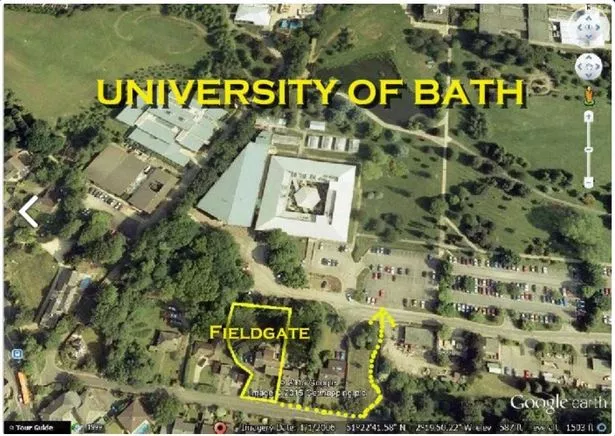
Fieldgate, a £6,000-a-month property on The Avenue next to the University of Bath, is advertised for students who want to live a life of luxury.

In Bath, landlords who want to change the use of their properties from from family homes to Houses of Multiple Occupation, or HMOs as they are more widely known, require planning permission from Bath and North East Somerset Council and an HMO licence depending on the type of property.

An HMO is a property rented to three or more individuals who are unrelated and share communal areas, such as a bathroom and kitchen.

Landlord Richard Fisher does not need a licence but does need planning permission to change the property’s use, which he has not yet sought.

planning permission
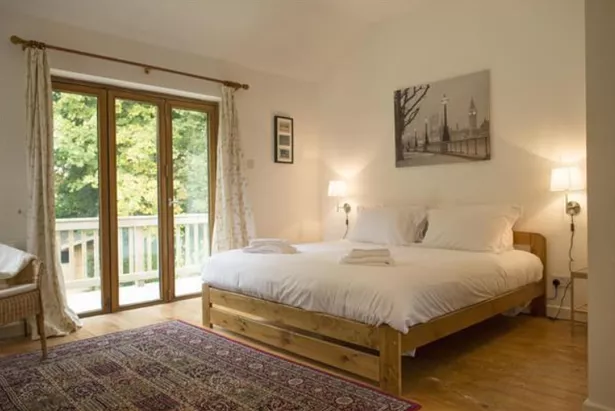
One bedroom comes with a balcony (Image: Upad)

He is not currently breaking council rules by advertising the home to students but would be if any were to move in.

The huge property is unlike a regular HMO – one bedroom comes with a balcony, there is a huge kitchen seating 14 people and a large garden perfect for “playing badminton”.

The advert on Upad.co.uk also specifies no deposit, guarantors, references or agent fees are required.

A spokesman for B&NES Council said that while it does not require an HMO licence, “it would still require planning permission” were students to move in.

You don't see a hot tub in every student house
You don’t see a hot tub in every student house (Image: Upad)

Fieldgate is also advertised on Airbnb for nearly £600 per night and can host up to 14 people.

The post reads: “Events and parties allowed only if you can convince me that you will look after the house and not annoy the neighbours with overly loud noise, especially after 10pm.”

After midnight the hot tub is out of bounds, but “there’s loads of room in the house of continued enjoyment”.

It is perfect for students as it is on the university's doorstep
It is perfect for students as it is on the university’s doorstep (Image: Upad)

“The neighbour opposite has been giving me some horror stories about guests shrieking with laughter, shouting, and even crying on their way to and from the taxi to the house and sometimes remaining outside to talk loudly on their phones, in the early hours and way after the neighbours have gone to bed at 10.30pm,” the post continued.

Richard Fisher, owner of Fieldgate, said the council confirmed the property does not require a HMO licence because it is only two-storeys, but he was unaware that he required planning permission.

“My intention is to not do anything which doesn’t have the right licence or planning consent.

“I run a very good establishment and I make sure everybody staying there is considerate for the neighbours.”

Source: Property Wire

Marketing No Comments

Developer challenges landmark Armley HMO decision

A landmark decision to refuse planning permission for a shared house in Armley is to be challenged after the developer launched an appeal.

In August councillors on Leeds City Council’s south and west plans panel turned down an application to turn a four-bedroom family terrace house in Conference Road into a house of multiple occupation (HMO) for four people.

They said the application, by Oakwood-based White Owl Properties Ltd, would alter the character of the area, that another HMO would affect community cohesion, cause parking problems and would lead to the loss of a much-needed family home.

But White Owl has now launched an appeal against the decision and the final decision on their proposals will be taken by an independent Government planning inspector.

Council planning officers had said there was not a high enough concentration of HMOs to the south of the railway line to turn down planning permission – but they arguments were overturned by councillors.

Applicant Sara Poskitt argued that she and her partner Sam Waterworth owned six properties between them and never had any noise problems with tenants. Ms Poskitt said that tenants were always vetted, that unemployed and DSS were not allowed and strict checks were in place.

The Planning Inspectorate says the appeal will be dealt with by the written representations procedure and the planning inspector will visit the site. No date has yet been given for the appeal.

Source: West Leeds Dispatch

Marketing No Comments

HMO plans for vacant Rhosddu property rejected by councillors

Plans to convert a property into Rhosddu into a HMO have been rejected by councillors.

The application to convert the property at 36 Rhosddu Road into a one bedroom self-contained flat and a five bedroom HMO (House Multiple Occupation) was submitted to Wrexham Council in September 2017.

The property is described in the application’s design and access statement as a three storey, Victorian mid-terrace dwelling that has been vacant for sometime and lies in a state of disrepair.

At present the building consists of a living room, dining room and a former kitchen and shower room at basement level. Two bedrooms and a further kitchen area are on the ground floor entrance level and a further three bedrooms and bathroom at the first level.

However the plans put forward proposed a remodelling of the building, along with converting the basement into a one bedroom apartment and the first and ground floors into a five bedroom HMO.

The proposals had been recommended for approval, with planning officer David Williams stating the committee would need to evaluate if “one additional HMO in that building would adversely affect the character” of that area.

In terms of approving the application, councillors told that the key consideration related to the concentration of HMOs in a 50m radius and if it goes over a 10% threshold. In this case there is already in excess of 14% of HMO properties and if the application was approved it would take the percentage to 17%.

Mr Williams said: “We need to look at the circumstances relating to that site, there is already a concentrated cluster.

“It is an area of mixed-use, it is not primarily residential and I think if you were looking to refuse, you need to be asking how one additional HMO would alter the character of that area given it would be sandwiched either side by an existing HMO.

“We have obtained information with the Council Tax records and it appears the property has been unoccupied since 2011, so it provides and opportunity to bring a beneficial use back into the building.

“I appreciate we are still working on new guidance for HMOs, so I don’t think it is something we can use at this point to justify the determination of this applications.

“We have tended to use the 10% figure in the past, in this case would accept it goes beyond the 10% limit. Again we need to look at the individual circumstances on the site and as an individual case.”

He added: “I think you need to ask yourself how one additional HMO in that building would adversely affect the character of the area.”

However Grovsenor Cllr Marc Jones described the situation with HMOs as “frustrating” and a “catch 22”, with the committee told previously that they could not refuse an application on the basis of not hitting the 10% threshold. However in this instance councillors were being told that “one more won’t make a difference”.

Cllr Jones said: “I want to give a background on the location. It is important people understand it is a very built area, it is mixed and I would challenge the view that it is not primarily residential.

“This block of five terrace houses directly overlooks Rhosddu Park and is adjacent to the cemetery. We have had a PSPO (Public Space Protection Area) to prevent people engaging in antisocial behaviour in place for a couple of years, with limited success, but that is as a result of concerns people have had about antisocial behaviour in this area.

“There have been public meetings and has been significant concerns in terms of police activity and because of that I am struggling really to understand the logic behind this.

“Given the concerns that have been reflected locally, I think Planning Policy H4 is clear and worth reading in its entirety and the last clause – the sub division of dwellings will only be permitted when a proposal would not result in the over concentration of HMOs to the detriment of crime levels, social fabric of the area and amenity of existing residents.

“That is fairly concise and clear cut. I don’t think we need to look any further.”

He added: “The idea that one more doesn’t make a difference, it does – one more makes huge difference. We have to be careful in ways we deal with the individual planning applications, there is a bigger picture we have to address.

“I am here to represent the concerns of residents in Rhosddu. I think there is a danger that we could set a dangerous precedent that landlords who have long-term empty dwellings feel they can get away with anything if they leave a dwelling empty long enough. It is a dangerous precedent to set.

“On the basis of Policy H4 I recommend refusal. It goes against our policy and think there is a very clear case.”

The recommendation for refusal was seconded by Cllr Paul Pemberton, who said he agreed that there are too many HMOs in such a small area.

Cllr I David Bithell, who represents the neighbouring Stansty ward, added: “There are too many HMOs and too much antisocial behaviour. Police are supporting us to try and reduce it and I think we need to make a stand.

“I am disappointed with the planning officer for recommending approval. I thought he would be supporting us on refusal.”

Members of the committee voted unanimously for refusing the application.

Source: Wrexham.com

Marketing No Comments

Unlicensed HMO owner ordered to pay £5,000

A couple who owned and managed an unlicensed HMO has been prosecuted and ordered to pay a total £4,991 in fines, court surcharges and costs.

Aligul Kala, aged 49, and Gulten Kala, aged 43, both of Gillingwood Road, York attended York Magistrates Court today (8 November) which issued each a fine of £1,200, a £120 surcharge each and ordered each to pay half the court costs which totalled £2,351.

The house at Blossom Street, York is owned by Gulten Kala and managed by her husband Aligul.

Council officers found it to be occupied by six people on 22 December 2016 when they visited the property following concerns about waste disposal from the address.

Officers met Mr Kala at the five-bedroom property on 1 February 2017.

They pointed out to him that as it was let to more than five persons over three storeys and had shared cooking and bathroom facilities, it should be licensed with the council as a house in multiple occupation, and showed him how to apply.

While there, they inspected the property and found that the standard of the accommodation was poor, with areas of concern around unsatisfactory fire safety measures, no carbon monoxide detection, kitchen units and the electric meter in a poor state of repair, loose handrails on staircases.

These hazards would have been identified and required to be repaired through the HMO licensing process and removed within a specified timeframe.

Mr Kala failed to make an application and continued to let the property – including one room rented at £340 per month – as an unlicensed HMO until mid March 2017, despite having been advised otherwise.

Tom Brittain, assistant director of housing and community safety at City of York Council, said:

Homes which are occupied by a number of unrelated people who share facilities, need to be licensed to ensure landlords uphold their responsibilities to their tenants. In this case, fire safety measures and maintenance standards were lacking, thereby putting the tenants at risk.

Anyone in any doubt about what constitutes an HMO and what they should do if they own, manage or let one should visit www.york.gov.uk/info/20097/private_landlords_and_tenants/1083/hmo_licensing

Source: Minster FM

Marketing No Comments

HMO Legislation, Mandatory Certificates and Proposed Changes

Landlords of student and professional house share accommodation all over the UK have a number of legal obligations to fulfill, and depending on the type of property you let or exactly where it is, there may be some additional considerations to take into account. This article is intended to serve as a brief reminder to HMO landlords and covers some of the legal responsibilities, although the list isn’t exhaustive. I felt obliged to collate some of the important considerations because it surprises me how many of our landlords are still unaware of their obligations. We invest and manage student property in a number of cities but you should always check with your local council as there are regional variations and additional requirement to some of these.

GAS SAFETY CERTIFICATE

Badly fitted and poorly serviced gas appliances can cause gas leaks, fires, explosions and carbon monoxide poisoning, so this stuff shouldn’t be taken lightly by student landlords or any student letting agent. Carbon monoxide is a poisonous gas which can kill quickly with no warning and some of the symptoms are headaches, dizziness and nausea – you can see why students might mistake this feeling for a hangover… so don’t risk it!

As a landlord, you have full responsibilities for the gas safety, and you’ll certainly need it for your license. By law, you must keep all of the gas appliances you supply in good condition and you must arrange a Gas Safe Inspection every year! The Gas Safe Register is now the official list of gas and heating engineers who are qualified to work safely and legally on your appliances and it replaced the CORGI registration. So, when you need any work done on your boiler or other gas appliances or it’s time to renew your annual Gas Safety Certificate, make sure you only get a Gas Safe registered engineer who will be insured and able to sign it off! It should cost around £50-£60 and is quick and easy! Find out more about the gas safety register here.

ELECTRICAL SAFETY CERTIFICATE

Landlords have a legal duty to ensure that their rental property, and any electrical equipment and appliances provided, are safe before a tenancy begins, and remain safe throughout the duration of a tenancy. This means you need a NICEIC electrical safety certificate, and the HMO license team will require this too. Unless you want to risk a potential fire, a hefty fine and even going to prison if the worst case happened, you need to ensure that the electrical system in your property is checked by a NICEIC registered electrician every at least every 5 years or when modifications are made to the system. It should cost around £140 and is quick and easy! To find out more about the NICEIC scheme and to find a contractor near to you, then please click here.

FIRE SAFETY CERTIFICATES

Fire safety has never been more important. Exactly what you require will depend on the type of property you have, the number of bedrooms and whether it is subject to HMO licensing policy. You might also need emergency lighting and whether or not you do, will depend on the same things. A good starting point would be the LACORS  guidance – the purpose of this guidance is to provide a common set of guidelines for each type of property, buy your local council team will be able to confirm this for you when you apply for a new license or need to renew.

LEGIONELLA CERTIFICATE

Legionella is a potentially fatal disease caused by a bacterium that has a tendency to grow in warm, stagnant water. As a landlord, you have a responsibility to ensure that you take steps towards minimising the risk of allowing legionella bacteria to grow in your property, primarily by ensuring a Legionella Risk Assessment (LRA) is completed for each property. A landlord can carry out the LRA themselves but unless they are competent as defined by the HSE (who are the people that will be suing them if they get it wrong), then they are wasting their time. So long as the recommendations detailed in the L8 ACOP are followed, landlords should be able to demonstrate that they have fulfilled their obligation to ensure their property is safe. For further reading, visit the HSE website here. Most landlords I come across outsource this certificate requirement for obvious reasons.

ENERGY PERFORMANCE CERTIFICATE (EPC)

The Energy Performance Certificate (EPC) gives tenants and landlords information on the energy efficiency of their property. It gives the building a standard energy and carbon emission efficiency grade from ‘A’ to ‘G’, where ‘A’ is the most efficient. From the 1st April 2018, there will be a requirement for any property rented out to have a minimum energy performance rating of E. If your property is currently less than E, part of your EPC report will list the potential rating that the building could achieve with a few recommendations on how to do it. You can read more about the EPC regulations here.

PLANNING PERMISSION AND ARTICLE 4 DIRECTION

In 2010 the Government introduced a new Use Class of ‘C4’ for any ‘House in Multiple Occupation’ (HMO) and generally speaking, it is permissible for any property owner to change their property from a C3 (Dwelling House) to a C4 (HMO) without the need for planning permission. However, the government also gave local councils the power to remove this permitted development right at their discretion by means of an ‘Article 4 Direction’. Councils have used this to designate limitations on the number of HMO’s in certain areas, so it’s important to establish whether your property sits within one. If it does, you’ll need planning permission and whether or not you will get it depends on a number of factors determined by the local planning policy. If you owned and used a property as a HMO before your local Article 4 direction was introduced, you may just have to present the historic evidence of if you are ever asked (or want to sell with the planning permission) – the local planning department will be able to issue you with a certificate of lawful use. You can read more about Article 4 Directions here and local council websites will usually have a map of any article 4 direction in place. Local authorities enforce this rigorously and mortgage lenders will often ask to see it too on application of lending.

HMO LICENSE

The Housing Act 2004 applies special rules to be adhered to HMO’s. The HMO licensing is intended to improve standards in properties where it was felt tenants were at ‘highest risk’. Generally speaking, a house with three or more stories, occupied by 5 or more people who form 2 or more households (a household being defined as persons belonging to the same family) is classified as an HMO in England and Wales, and is and subject to licensing.

Licensing Conditions:

The purpose of a HMO licence is to ensure that the property is safe and suitable for the number of tenants and to ensure that the person who is managing the property is ‘fit and proper’ You need a HMO licence if your property fits the governments description of a HMO (see below):

  • It’s rented to 5 or more people who form more than 1 household
  • It’s at least 3 storeys high
  • Tenants share toilet, bathroom or kitchen facilities

A variety of criteria, standards and requirements are enforced by inspection before you can get your HMO license granted. It ranges from minimum room sizes to amenities and evidence of safety certificates. Your local council may also add other conditions to your licence such as improving the standard of some facilities and amenities in your property, but they will let you know this during the process. Even if your property is smaller and rented to fewer people, you may still require a HMO license depending on your local council requirements. I am aware some local councils impose mid-term license inspections and requirements do regularly change.

Proposed changes to licensing conditions

The government is currently undertaking consultation on reforms to the HMO licensing criteria which will likely mean that a further 870,000 rented properties will require a HMO licence. There are a number of suggested reforms such as removing the 3 storey requirement and adjusting the minimum room dimensions. I will report on the subject as the consultation progresses, but assuming this will further pressurise the private landlord, it would be wise to plan ahead if you are considering making some adjustments to your property. You can see some examples of effective HMO designs here.

Applying for a HMO license

To renew or apply for a new licence, you need to contact your local council to request an application form, you can usually do it online. You can apply for the licence yourself as a landlord, or you can use a property management company who might have a better understanding of the process. You’ll be charged a fee which is set by the council, but running the risk of operating a HMO without the necessary application could result in a much bigger fee down the line! In fact, you could get an ‘unlimited fine’ for renting out an unlicensed HMO.  For more information you can read the governments full guide on HMO licensing here.

RIGHT TO RENT

This is the check that the landlord or letting agent must make to ensure that prospective tenants or occupants have a ‘right to rent’. It’s a piece of government legislation, and if the check is not made, and the occupier has no right to rent, there may be a civil penalty to pay. You can download and issue a guide here.

Source: Property 118